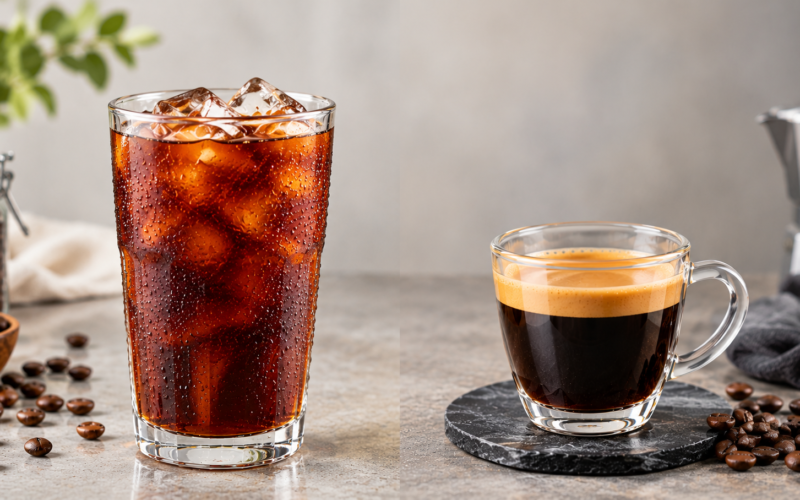
Cold brew and espresso are two of the most popular coffee drinks in any coffee shop. Both are strong and loved by every coffee lover, they might look similar these drinks are different in their own way. They are made differently and they taste different, and they have different caffeine levels. In this guide, we explain cold brew vs espresso in simple words so you can choose the right one for your taste.
Key Points
- The biggest difference between espresso vs cold brew is how they are made.
- Espresso is made fast with hot water and high pressure. Cold brew is made slowly by steeping coffee grounds in cold water for many hours.
- Espresso is thick, bold, and intense. Cold brew is smooth, mellow, and less acidic.
- Espresso has more caffeine in a small shot, but a full cup of cold brew can have as much or more caffeine in total because the serving is bigger.
- Both can be used to make iced coffee, iced latte, and many other coffee drinks.
What Is Cold Brew?
Cold brew coffee is made by steeping coffee grounds in cold or room-temperature water for a long time, usually 12 to 24 hours. After steeping, the coffee is strained to remove the grounds. This process requires no heat, and that is why the taste is so different from hot coffee.
Most people make cold brew coffee as a cold brew concentrate. This is a strong coffee base that you mix with water, milk, or ice. Cold brew tastes smooth, slightly sweet, and less sharp because of its slow process. Cold brew is also sometimes called cold press coffee, cold drip coffee, or steeped coffee. Nitro brew is a version of cold brew that is served with nitrogen gas, which gives it a creamy, foamy texture.
What Is Espresso?
Espresso is a small, strong coffee made by pushing hot water through very fine ground coffee at high pressure. This happens in an espresso machine and takes only about 25 to 30 seconds. A normal espresso shot is about 30 ml (1 ounce) and has a thick, rich body with a layer of golden foam on top called crema.
Espresso is not a type of coffee bean. It is a brewing method. You can make espresso from any coffee beans, but many people choose dark roast espresso coffee beans for a deep, bold flavor. Espresso is also the base for many popular espresso drinks, such as latte, cappuccino, americano, and mocha.
Cold Brew vs Espresso: Key Differences
So, is cold brew espresso? No. Cold brew and espresso are two completely different drinks. Cold brew espresso is not a real category, though some people use the words “cold brew espresso” to describe a strong cold brew concentrate or a cold espresso shot served over ice.
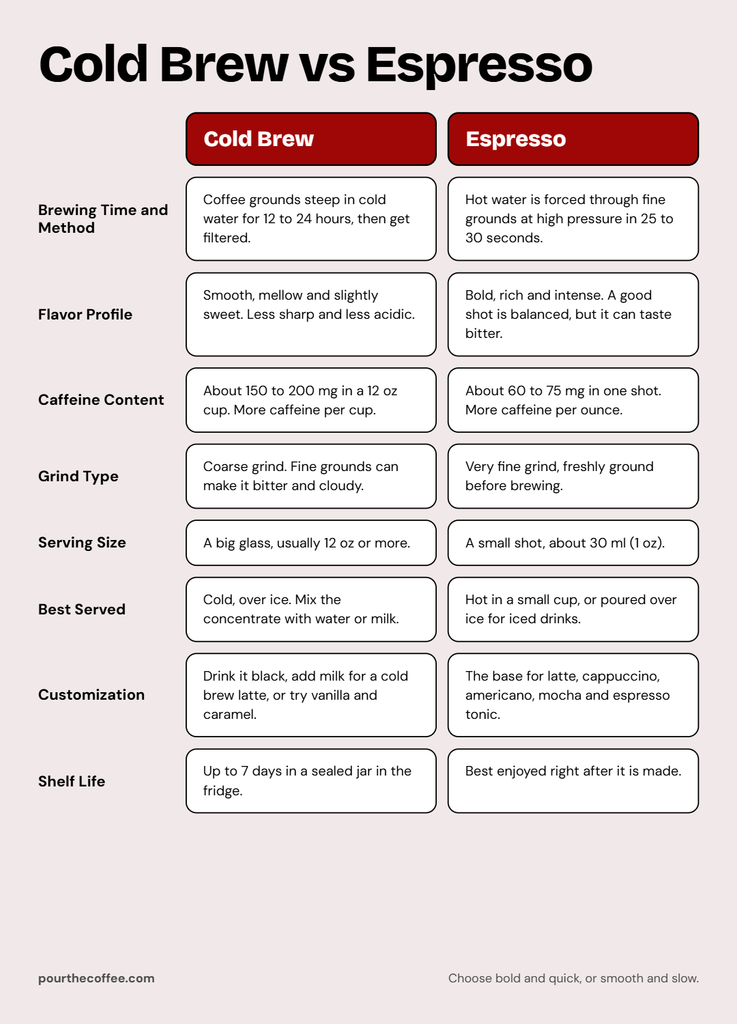
The main differences come down to time, temperature, pressure, grind size, and taste. Espresso uses hot water, high pressure, and a very fine grind. Cold brew uses cold water, no pressure, and a coarse grind. Espresso takes less than a minute, while cold brew takes many hours. Espresso tastes bold, rich, and sometimes bitter. Cold brew tastes smooth, mellow, and naturally sweet.
Quick Comparison: Cold brew vs Espresso
Coffee Brewing Methods and Prep Time
Espresso is the fastest way to make a strong coffee. You grind the beans fine, pack them into the portafilter, and let the machine push hot water through. The whole process takes less than a minute, which is why espresso is the favorite in every busy espresso cafe.
Cold brew needs patience. You add coarse ground coffee and cold water to a jar or pitcher, stir, and let it sit in the fridge or on the counter for 12 to 24 hours. Then you filter it and store it. The work is simple, but the waiting time is long. The good news is that one batch can last you up to a week in the fridge, so many people make a large batch and enjoy it all week.
Other coffee brewing methods include drip coffee, pour over, French press, and moka pot. Drip coffee uses hot water dripping slowly through medium ground coffee. If you want to know the best way to make coffee, it really depends on your taste and how much time you have.
Flavor Profiles
Espresso has a strong, bold, and intense taste. You can taste notes like chocolate, caramel, nuts, or fruit depending on the beans and roast. It can be a little bitter and acidic, but a good shot is balanced and rich.
Cold brew has a smooth, soft, and less sharp taste. Because it is brewed without heat, it pulls out fewer of the bitter and acidic compounds from the beans. Many people notice chocolatey or slightly sweet flavors. This is why cold brew is a good choice for people who find regular coffee too harsh or want less acidic coffee.
Taste also changes with the beans you use. A dark roast gives a bolder, smoky taste in both drinks, while a light roast brings out more fruity and floral notes.
Caffeine Content
This is the question most people ask: does cold brew have more caffeine than espresso? And is cold brew stronger than espresso?
The answer depends on how you measure it. Ounce for ounce, espresso has more caffeine. One espresso shot (about 30 ml) has around 60 to 75 mg of caffeine. But nobody drinks espresso in large cups. A regular 12 oz cup of cold brew usually has around 150 to 200 mg of caffeine, and it can be more if it is made from a strong cold brew concentrate. So a full glass of cold brew often has more caffeine than one shot of espresso, but about the same as two or three shots.
Caffeine in cold brew coffee changes a lot based on the coffee-to-water ratio, steeping time, and the type of beans. If you want less caffeine, you can try decaf, or a caffeine free cold brew made from decaffeinated beans. A cold brew with the most caffeine is usually a concentrate that is not diluted with water or milk.
Customization and Versatility
Both drinks are very flexible. Espresso is the base of many coffee drinks. You can turn it into a latte with steamed milk, a cappuccino with foam, an americano with hot water, or an iced espresso poured over ice. You can also make an espresso tonic by mixing espresso with tonic water, or even use it in a coffee cocktail.
Cold brew is easy to customize too. You can drink it black over ice, add milk or oat milk for a cold brew latte, or mix in vanilla syrup or caramel for a vanilla cold brew or caramel cold brew. You can also top it with cream, make cold brew iced coffee, or use it in desserts and coffee recipes.
If you like iced coffee, both work well. The difference between cold brew and iced coffee is that iced coffee is usually hot coffee that is cooled and poured over ice, while cold brew is never heated. This makes cold brew smoother and less watery.
Equipment Needed
For espresso, the best tool is an espresso machine (manual, semi, automatic). A good machine is the key part here, along with a coffee grinder that can make a fine grind. Machines can be expensive, and they take some practice to use. If you want something cheaper, a moka pot is a great option.
For cold brew, you need much less. A large jar or pitcher, a coffee filter or fine strainer, and coarse ground coffee are enough. If you want to make it more often, you can buy a cold brew maker, a cold brew pitcher, or a cold brew coffee machine, which makes the process easier. There are also cold brew coffee pods and cold brew packs that work like tea bags, so you only need to put them in water.
That is why cold brew is the easier choice for homemade drinks, and espresso is the better choice if you enjoy a real coffee shop experience.
Choosing the Right Coffee Beans
The right beans make a big difference in both drinks. For espresso, choose fresh, whole beans and grind them right before brewing. Look for beans that say “espresso roast” on the bag, as they are roasted to give a rich and balanced shot. Dark roast is the most common, but medium roast also gives a good result.
For cold brew, choose beans that give a smooth taste. Medium and dark roast beans work very well. Coarse ground coffee is important, because fine grounds can make the cold brew bitter and cloudy. You can use fresh whole beans and grind them coarse at home, or buy pre-ground cold brew coffee.
If you want less acidic coffee, look for low acid coffee beans or beans from regions known for a mellow taste.
Coffee Types and Classifications
There are two main types of coffee beans, arabica and robusta. Arabica beans are smoother, sweeter, and more flavorful. They are the most popular coffee beans in the world and are used in most specialty coffee. Robusta beans are stronger, more bitter, and have more caffeine. Some espresso blends include a little robusta to add body and crema.
Coffee is also grouped by roast level. Light roast has a bright and fruity taste with more acidity. Medium roast is balanced and smooth. Dark roast is bold, smoky, and less acidic. The difference between coffee roasts matters, because the same beans can taste very different depending on how they are roasted.
Coffee Bean Sourcing and Quality
Good coffee starts with good beans. Look for fresh, roasted coffee beans with a roast date on the bag. Beans are best within a few weeks of roasting. Specialty coffee beans are graded higher in quality and often come with details about where they were grown.
Many people also care about ethically sourced coffee beans, which means farmers were paid fairly and the beans were grown responsibly. Buying from trusted roasters or a local coffee store is a good way to find high quality beans. Store your beans in an airtight container away from light, heat, and moisture to keep them fresh.
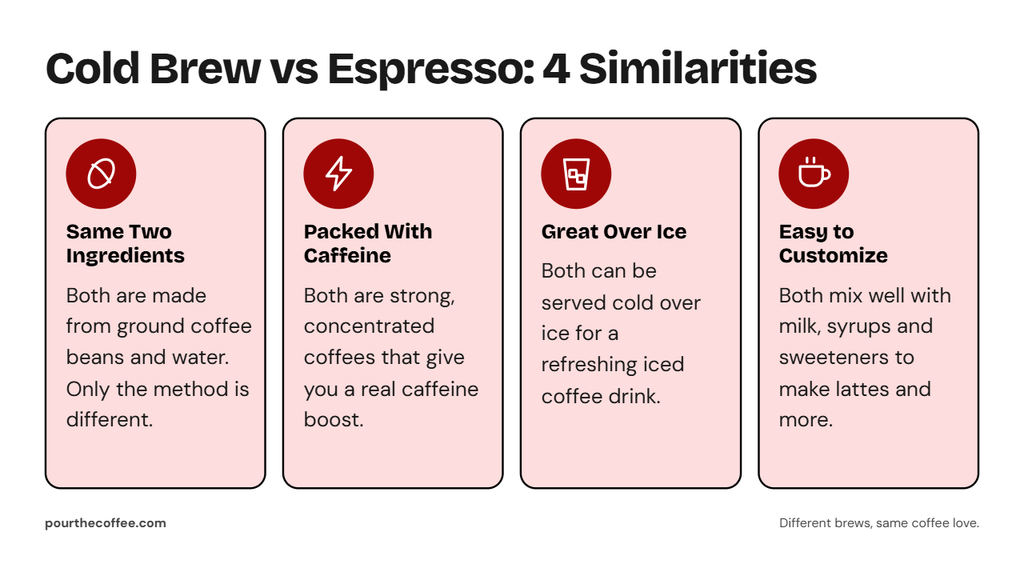
Similarities Between Cold Brew and Espresso
Here is a quick similarities between these drinks.
Quick Cold Brew Coffee Recipes
Here is an easy homemade cold brew recipe that anyone can follow.
1. Classic Cold Brew
Ingredients
- ½ cup coarsely ground coffee
- 2 cups cold water
- Ice cubes
Method
- Mix coffee grounds and cold water in a jar.
- Cover and refrigerate for 12–18 hours.
- Strain the coffee to remove the grounds.
- Pour over ice and enjoy.
Easy Espresso Recipes
Here is an easy espresso drink recipe.
1. Straight Espresso Shot
Ingredients
- 2 shots espresso
- ½ cup cold water
- Ice cubes
Method
- Brew two shots of espresso.
- Fill a glass with ice cubes.
- Add cold water and pour in the espresso.
- Stir and serve immediately.
Read more recipes
Iced latte vs iced mocha: Know the difference
Whole milk for coffee: Benefits, nutrition and some tips
FAQs
How long does cold brew last?
Homemade cold brew stays fresh in a sealed jar in the fridge for about 7 days. Cold brew concentrate can last a little longer.
Is cold brew stronger than espresso?
Espresso is stronger in taste and more concentrated. Cold brew tastes smoother, but it can still be strong in caffeine, especially when it is made as a concentrate.
Can I make espresso without an espresso machine?
You can make an espresso-style coffee using a moka pot or an AeroPress. It will not be exactly the same as real espresso, but it works well for lattes and iced drinks.
What are the disadvantages of cold brew coffee?
Cold brew takes 12 to 24 hours to make and costs more because it uses more coffee grounds. It stays fresh for only about 7 days and can taste flatter than hot coffee. A full glass also has a lot of caffeine, which can cause jitters if you drink too much.